

Paid Advertisement
If you’re considering updating your flooring, you may not immediately think to consider your dog. But different types of floors can make stages of a dog’s life easier, including accidents in puppyhood and slips in their senior years. Even if you’re renting or can’t change your floors, there are ways to make flooring more safe and accessible for your dog.
What Kinds of Floors Do Most People Have?
Terri Harrington, Vice President of Shaw Floors, says that preference for floor type varies across the United States. There’s no leader among dog owners, though many opt for durable and easy-to-clean flooring types, like luxury vinyl or laminate.
Type of flooring also depends on what the room is used for. In spaces like kitchens, hallways and entryways, people tend to lean towards floors that are water resistant. These areas are also usually higher-traffic, so they need to be more durable.
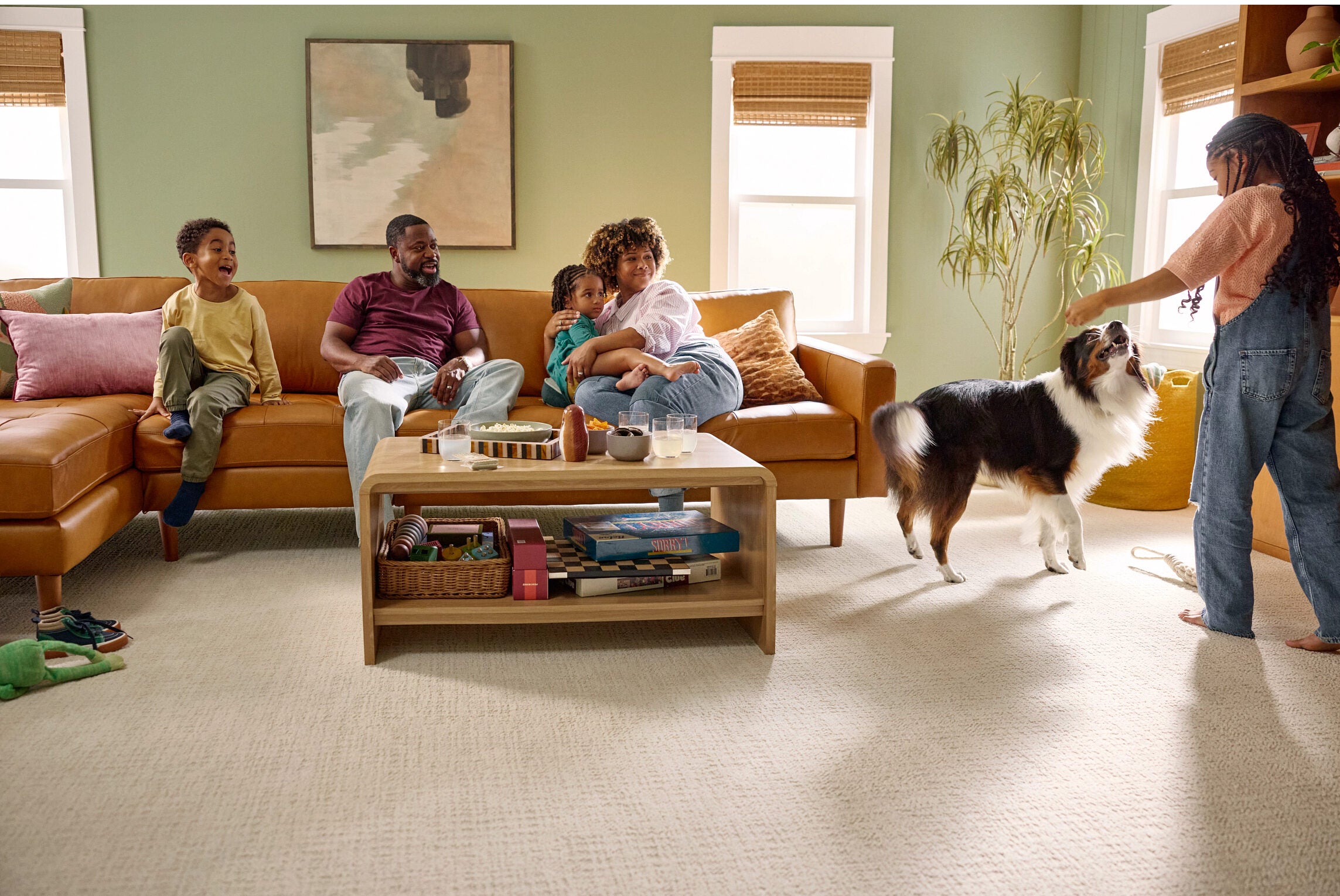
In other spaces, like bedrooms or living rooms, carpet is still a popular choice. It provides warmth, softness and acoustic properties, so it’s a great floor choice for rooms that are designated for relaxation.
Planning Out Your Floors as a Dog Owner
Whether you’re bringing home a new puppy or adjusting to life with a senior dog, there are many considerations in choosing a floor. You may choose to change out your floor as your dog ages, or start them right off with softer floors if you don’t mind a little more cleaning
Choosing a New Floor for a New Dog
“It’s helpful to think about how your flooring will perform over years of daily life with pets,” says Harrington. “Floors that resist scratches and are easy to clean can make it much easier to manage muddy paws, shedding, and accidents.”
Comfort is also important, as well as traction. Dogs benefit from surfaces that have a bit of a grip so that they can move around confidently. Combinations of flooring types throughout the home provide the best of both worlds: luxury vinyl in busy areas, and carpet in spaces where pets can relax.
Changing Floors as Dogs Age
Most homeowners don’t need to change their flooring as their dog gets older. Small adjustments can many times be enough to keep their pet comfortable and safe. Like humans, when dogs age, traction and joint support become more important. Carpet helps provide warmth and helps cushion their joints.
But you can also make these adjustments in smaller ways than changing your flooring.
“For older dogs, traction and comfort become especially important,” Harrington says. “Many homeowners add area rugs and carpet stair runners or choose carpet for full rooms in spaces where their dogs spend most of the time resting.”
Best Types of Floors for Different Types of Dogs
When considering what type of flooring is best for your dog, there are different factors to consider. “The best flooring choice often depends on a dog’s size, age, and activity level,” Harrington says. “For larger or more energetic dogs, durable hard surfaces like luxury vinyl can be a great option: it resists moisture, stands up to active dogs, and it’s easy to clean.” Harrington notes it’s also a great choice for homes with puppies who are still housetraining, since they’ll be more prone to accidents.
Most Durable Flooring for Dogs
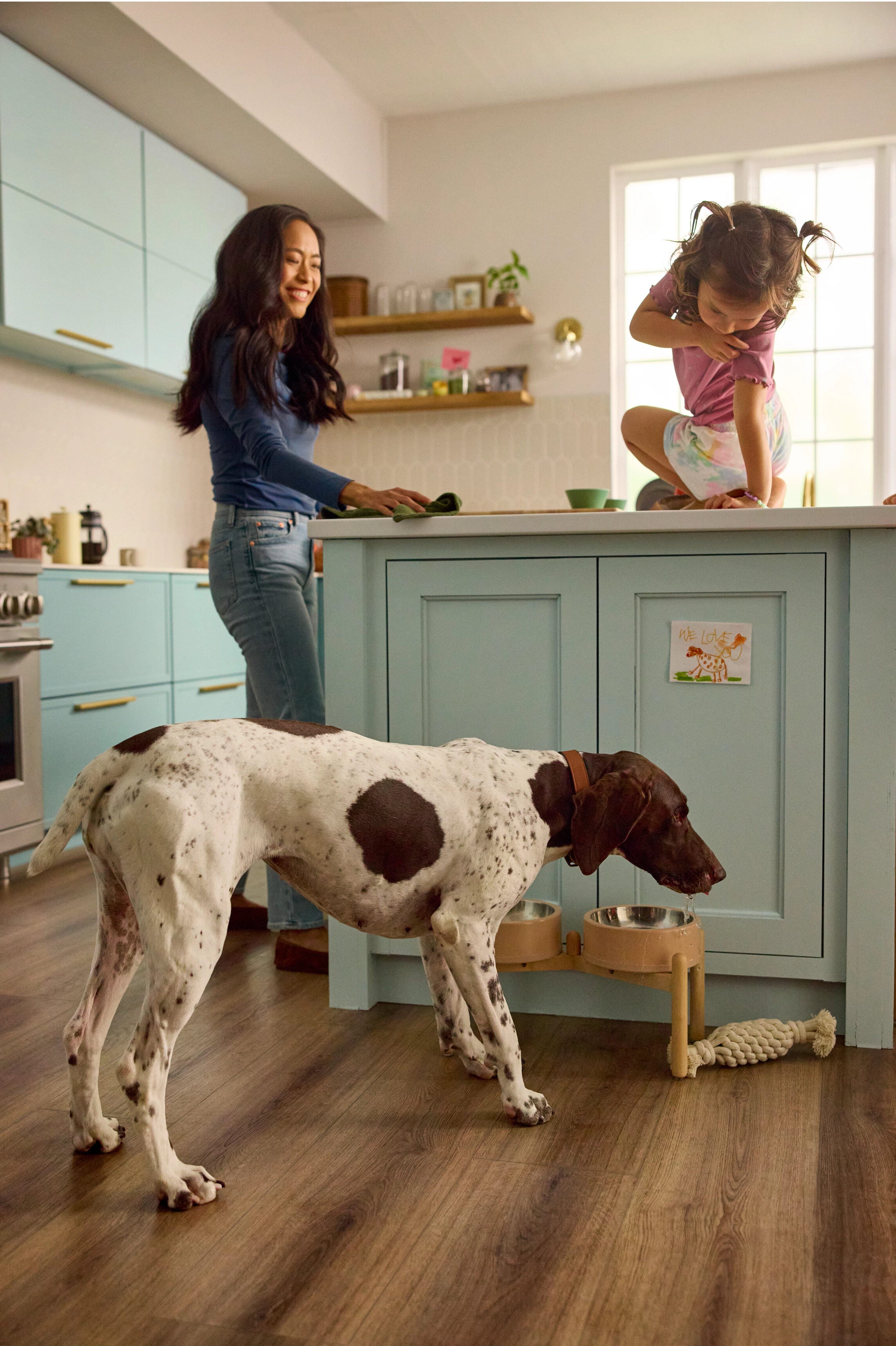
Durable flooring is important for dog owners, especially in high-traffic areas. When looking for floors, it’s good to consider how well it’ll be able to handle scratches, moisture, and everyday messes. Luxury vinyl is a popular option since it’s waterproof, easy to clean, and new innovations make it resistant to scratches from pet nails – making it able to easily handle the occasional accident.
Carpets aren’t out of the picture though. “Carpet options with a moisture-barrier backing helps prevent spills or accidents from reaching the subfloor,” Harrington says. “This stops lingering odors and long-term damage.”
Shaw Floors recognizes the growth of pet ownership in the U.S. and has invested in research and innovation with pets in mind. Shaw Floors’ Pet Perfect collections are available in carpet, luxury vinyl, and laminate, and are engineered specifically to stand up to the reality of life with dogs. They’re designed to help resist scratches, simplify cleanup, and maintain their beauty despite anything thrown at them.
Renter-Friendly Flooring Options
If you’re renting a home, you may not have the option to change the floors. But there are still ways that you can make your home safer and more dog friendly. Adding things like area rugs or runners can help provide traction on surfaces that may be slippery, like hardwood or tile. Rugs also act as soft spots for dogs to rest and can help protect the floor underneath from scratches or accidents.
“Small adjustments like these can make a big difference in creating a safer, more comfortable space,” says Harrington. If you have a puppy or a very active dog – putting rugs or mats near entryways, food bowls, or areas that your dog likes to play is a great move. This can help you manage things like muddy paws and spills more easily.
Thinking Long Term About Flooring
When considering your flooring options with your dog in mind, it’s helpful to think long term. All dogs will age, so having a good mix of flooring to consider their needs is often a good way to go. Both carpets for comfort and luxury vinyl for easy cleaning have pros and cons for dog owners.
“It can also help to select options that perform well through every stage of a dog’s life,” Harrington says. “From energetic puppies to the slower pace of senior dogs, durable, easy-to-clean hard surface flooring paired with rugs, or carpet for resting can create a comfortable environment that supports both pets and their owners for years to come.”
Whatever you choose for your flooring, remember that it’s your dog’s home too! Choosing something that is durable and also keeps their needs in mind will make both of your lives easier.
The post What Kind of Flooring Is Best for Your Dog? appeared first on American Kennel Club.